How to Estimate Your PCS Moving Budget?
A PCS move involves more than packing boxes and traveling to a new duty station. From transportation and temporary lodging to meals and moving supplies, the costs can add up quickly if you don’t have a plan. Creating a budget before your move helps you understand where your money may go and gives you more confidence as moving day gets closer.
This guide is designed to help service members and military families build a simple PCS moving budget before they relocate. Whether you’re moving across the country or preparing for an overseas assignment, knowing your expected expenses can make it easier to plan ahead and avoid unnecessary surprises.
Helpful PCS Budget Planning Tools
Every PCS is different. Your destination, family size, travel method, and moving arrangements can all affect your overall costs. That’s why it’s helpful to estimate your expenses early instead of waiting until the last minute. Even a basic budget can help you make better decisions, track your spending, and prepare for unexpected costs along the way.
In this guide, you’ll learn which expenses to include in your PCS budget, practical ways to reduce moving costs, and simple tips to stay organized throughout your relocation. You’ll also find planning checklists and helpful budgeting ideas that can make your move easier to manage from start to finish. While this guide is intended to help you plan your finances, your actual travel and relocation benefits are determined by your official PCS orders and current military regulations. Use this information as a planning resource to help you prepare for a smoother, more organized move.
Why You Should Plan Your PCS Budget Before Moving
Planning your PCS budget before moving gives you a better understanding of what your relocation may cost. Instead of dealing with unexpected expenses along the way, you can prepare for them in advance and make informed decisions throughout your move.
Avoid Unexpected Expenses
A simple budget helps you identify common moving costs, such as travel, lodging, meals, packing supplies, and transportation, before they become last-minute surprises.
Reduce Financial Stress
Knowing what you may need to spend can make your move feel more manageable. A budget helps you stay focused and avoid unnecessary financial pressure during your relocation.
Compare Moving Options
Planning ahead gives you time to compare different moving methods and choose the option that best fits your situation and your PCS orders.
Prepare for Temporary Costs
Some expenses, such as hotel stays, fuel, or short-term storage, may arise before you reach your new duty station. Including these in your budget helps you stay prepared.
Stay Organized Throughout Your Move
Keeping track of your expected expenses, receipts, and important dates makes it easier to manage your move from departure to arrival. An organized budget also helps you review your spending after the move is complete.
What Expenses Should You Include in Your PCS Budget?
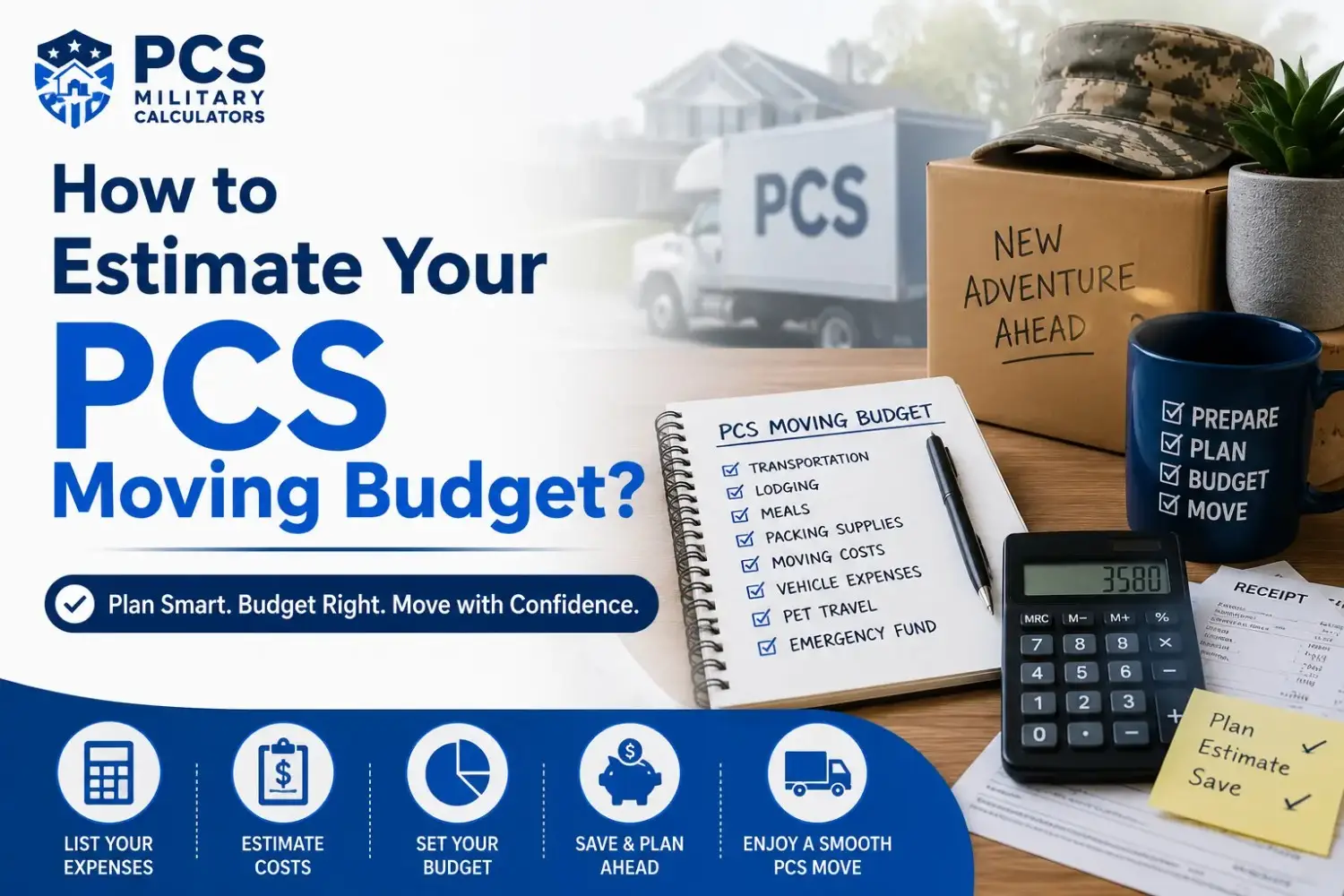
A PCS budget should include every major expense you expect before, during, and after your move. Planning these costs in advance can help you stay organized and avoid unexpected financial surprises.
Transportation Costs
Estimate the cost of getting yourself and your family to your new duty station.
Fuel or Airfare
Include fuel for driving or airfare if commercial travel is required.
Temporary Lodging
Budget for hotel stays before, during, or after your move if needed.
Meals During Travel
Plan for food and drinks while traveling to your new location.
Packing Supplies
Include boxes, tape, labels, and other packing materials.
Household Goods Moving Costs
Estimate costs related to packing, shipping, or storing household goods.
Vehicle Expenses
Budget for maintenance, registration, tolls, parking, or shipping if applicable.
Pet Travel Costs
If traveling with pets, include transportation, health certificates, and related fees.
Emergency Expenses
Set aside extra funds for unexpected costs that may arise during your PCS.
| Expense Category | Estimated Cost ($) |
|---|---|
| Fuel or Airfare | $________ |
| Hotel | $________ |
| Meals | $________ |
| Packing Supplies | $________ |
| Truck Rental | $________ |
| Storage | $________ |
| Vehicle Costs | $________ |
| Pet Travel | $________ |
| Miscellaneous | $________ |
| Estimated Total | $________ |
Ways to Reduce PCS Moving Expenses
Small planning steps can help lower your PCS moving costs. These simple tips make it easier to stay on budget and avoid unnecessary expenses.
Plan Early
Start preparing as soon as you receive your PCS orders.
Declutter Before Packing
Move only the items you need and donate or recycle the rest.
Track Every Expense
Record your moving costs to help manage your budget.
Compare Moving Options
Review available transportation and moving choices before deciding.
Keep Important Receipts
Store receipts and paperwork together throughout your move.
Avoid Last-Minute Purchases
Buy moving supplies early to reduce unexpected spending.
Conclusion
A well-planned PCS budget can make your move easier to manage. By estimating your expenses early, tracking your spending, and preparing for unexpected costs, you can make better financial decisions throughout your relocation. Use this guide as a starting point to organize your budget before moving day. If you need planning estimates, try our PCS calculators to estimate travel days, household goods weight allowances, and other moving costs.
Remember, these tools are designed for planning purposes only. Your official travel and relocation benefits are based on your PCS orders and the current Joint Travel Regulations (JTR). Taking a little time to plan today can help you stay organized, avoid unnecessary expenses, and begin your next duty assignment with greater confidence.